
Audience Research
Find the People Your Offer Is Built to Help
Turn assumptions into insight so your content, lead magnets, and offers speak to real needs, and attract leads more likely to become buyers.
Relevant Marketing Starts With Knowing Who You Serve

The right audience is not a demographic checkbox or a vague avatar with a made-up favorite coffee. It is a group of real people trying to make progress, solve problems, avoid frustrations, and choose the best next step.
When you understand what matters to them, you can create content that earns attention instead of merely adding to the noise.
Audience research helps you identify the goals people already have, the words they use to describe their challenges, and the obstacles keeping them from moving forward. Those insights make your lead magnets more useful, your traffic strategy more focused, and your offers easier to understand.
Rather than trying to persuade everyone, you can show the right people that you understand the problem they came to solve.
At Lead Magnet Mastery, we approach audience insight as the foundation of a meaningful buyer relationship. Use what you learn to help someone take a valuable first step, then make the next logical solution available when they are ready.
That is how you create marketing that feels relevant, useful, and built for more than collecting email addresses.
Questions That Reveal a Market Worth Serving
- What specific result is this audience actively trying to achieve?
- What does success look like to them in practical, emotional, or financial terms?
- What urgent problem are they trying to solve right now?
- Which frustrations, risks, or time-wasting obstacles keep getting in their way?
- What have they already tried, and why did those solutions fall short?
- What would make this problem feel easier, faster, safer, or more achievable?
- How does the audience describe the problem in its own words?
- What questions do they ask in searches, communities, calls, and comments?
- Which phrases signal urgency, confusion, skepticism, or readiness to act?
- What beliefs or misconceptions shape how they evaluate solutions?
- What content formats do they trust when learning about this topic?
- What promise can you make clearly without using hype or insider jargon?
- Is there evidence of demand through searches, conversations, purchases, or competitors?
- When does this problem become important enough for someone to seek help?
- What event, deadline, or change triggers them to look for a solution?
- Who influences the decision, and what objections may need to be addressed?
- What budget, time, tools, or confidence level affects their buying decision?
- What next offer would naturally help after they get the first result?
Find the Job Behind the Click
Understand What Your Audience Wants and What Keeps Them Stuck
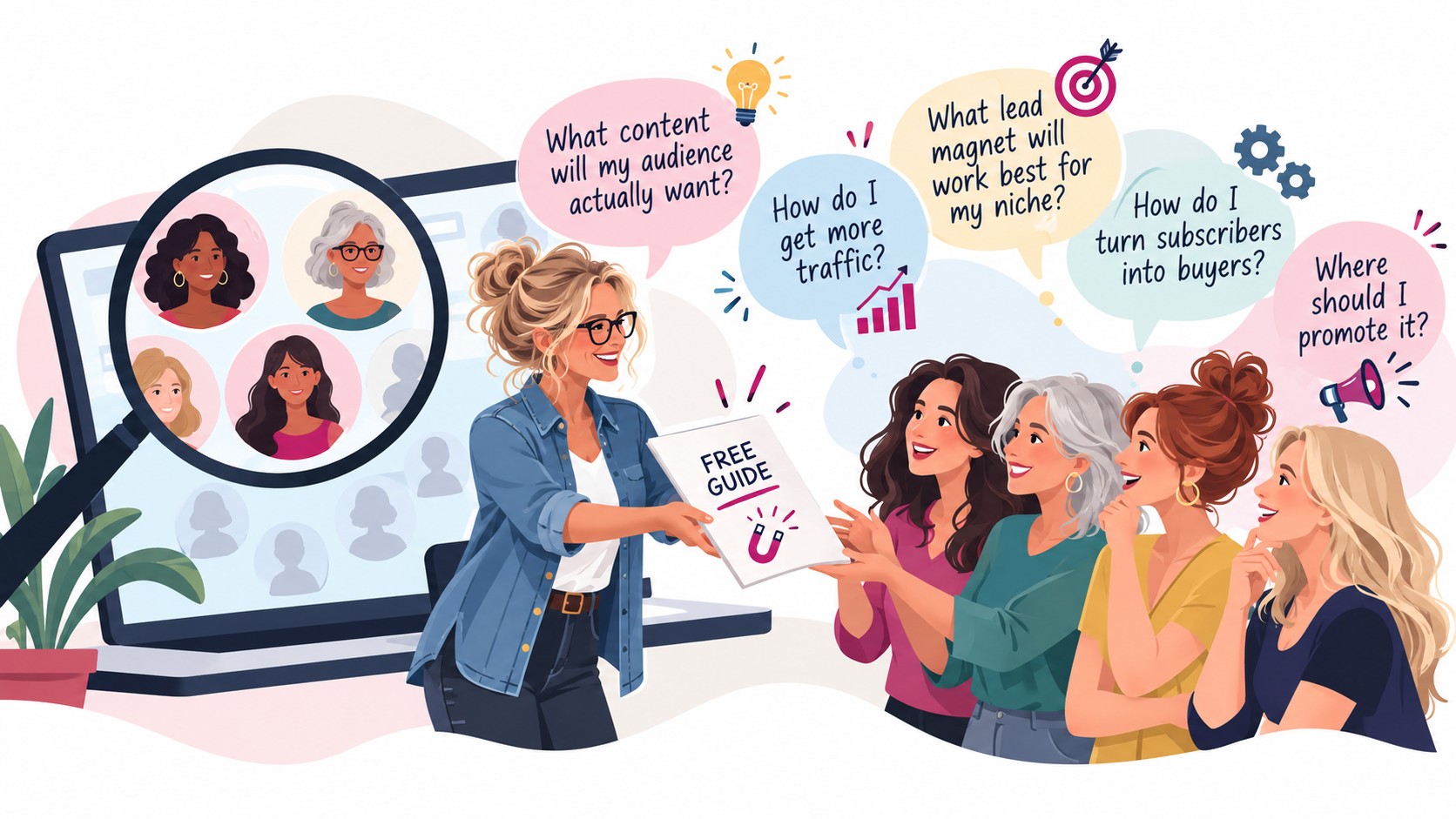
Great audience research goes beyond demographics and vague pain points. Listen for the progress people are trying to make, the obstacles slowing them down, and the result that would make them say, “Finally.” When you understand their goals, frustrations, and desired outcomes in their own context, you can create content, lead magnets, and offers that feel useful before anyone asks for the sale.
Let Their Language Shape the Message
Words That Earn Attention
Collect the phrases your audience uses in comments, reviews, sales calls, search queries, and communities. Their wording reveals how they describe the problem, and gives your headlines, hooks, and subject lines a far better starting point than clever guessing.
Concerns That Guide Content
Notice the questions, doubts, and objections that appear again and again. Each one can become a practical article, video, email, or lead magnet that helps people move from confusion to a confident next step.
Priorities That Improve Conversion
Audience language tells you what matters most right now: speed, simplicity, certainty, support, cost, or a specific outcome. Use those priorities to position landing pages and offers around the value people are already looking for.
Turn Research Into Clear Marketing Decisions
Step 1
Gather real evidence from customer conversations, reviews, search results, social posts, competitor feedback, and your own analytics. Focus on what people want, what they have tried, and where the journey breaks down.
Step 2
Organize your notes into themes: goals, frustrations, exact phrases, objections, triggers, and desired outcomes. Repeated patterns matter more than a single loud opinion, so look for the signals that keep showing up.
Step 3
Translate those patterns into decisions. Choose the problem your content should address, the promise your lead magnet should make, the language your page should use, and the logical next offer that keeps the Yes Loop moving.
Audience-Centered Messaging vs. Generic Messaging
The difference is not just better copy. It is whether people feel understood enough to take the next step.
Audience-Centered Messaging
Built from real goals, frustrations, language, and buying context, so the message meets people where they are.
- Relevance95%
- Trust90%
- Engagement88%
- Conversions82%
- Lead Quality85%
Generic Messaging
Broad claims and interchangeable promises that may attract attention, but rarely create a strong reason to act.
- Relevance45%
- Trust40%
- Engagement48%
- Conversions35%
- Lead Quality42%
Build a Natural Path From Click to Next Offer
Start With the Traffic Source
Identify what how people found you; the search, post, ad, referral, or video, and the problem they expect to solve. Match the first message to the intent behind that click.
Deliver the Right First Win
Choose a lead magnet that solves the immediate problem your visitor already cares about. A useful, specific win earns attention better than a vague promise ever will.
Continue the Conversation
Use follow-up content to deepen the same topic, answer the next logical questions, and introduce the next offer only when it genuinely helps them move forward.
Audience Research Questions, Answered
Good audience research is less about collecting endless data and more about making better decisions about your message, lead magnet, and offer.
How much audience research is enough before I create content or a lead magnet?
You have enough to begin when you can clearly describe a specific audience, the problem they want solved, the words they use for it, what they have already tried, and the outcome they want. Start with those patterns, publish, then keep learning from real responses.
What should I do if I serve multiple audience segments?
Do not force every segment into one generic message. Prioritize the segment with the clearest need and strongest fit for your offer, then create separate content paths, lead magnets, or landing pages when the problems and desired outcomes differ materially.
How can I validate that an audience problem has real demand?
Look for repeated evidence: search activity, recurring questions in communities, competitor offers, reviews, sales calls, customer interviews, and people already spending time or money on workarounds. Demand is strongest when the problem is frequent, urgent, and costly to ignore.
Where can I find useful audience language?
Listen where your audience speaks naturally: interviews, discovery calls, support emails, reviews, comments, forums, Reddit threads, YouTube discussions, and surveys. Save exact phrases, especially when people describe frustrations, failed attempts, and hoped-for results.
Can AI do my audience research for me?
AI can speed up brainstorming, organize notes, spot themes, summarize reviews, and help turn findings into content ideas. It cannot replace direct customer conversations, firsthand market context, or your judgment about what is true, important, and worth acting on.
How do I know whether my message actually fits my audience?
Test for response, not just compliments. The right message attracts qualified clicks, relevant replies, lead magnet opt-ins, and conversations with people who recognize themselves in the problem. If the next offer feels like a natural continuation, your fit is getting stronger.
Pick One Person. Solve One Problem. Start This Week
Choose one group of people, one problem they’re already trying to fix, and one simple next step you want them to take. Then write something just for them, like an article, a lead magnet, or an offer, using the same words they’d use to describe their problem. When it feels like you read their mind, the next step feels obvious. Talking to the right few beats shouting at everyone.